‘Listen, you can’t have regrets, because everything is supposed to happen the way it’s supposed to happen.’
Category: Books
Quote Of The Week
‘Like nature, like life, the storm will pass. The night will end. Spring will come.’
Quote Of The Week
‘We are kept keen on the grindstone of pain and necessity.’
Quote Of The Week
‘The most painful thing, is losing yourself in the process of loving someone too much, and forgetting that you are special too.’
Quote Of The Week
‘When the world presses in on you, threatens to drive you mad, there’re only two ways you can find peace. One is to impose your will on everyone and everything around you. The other is to surrender your will, your ego, and withdraw from those who are always wanting you to ‘fix’ their lives.’
Luke Skywalker talking to Han Solo from Star Wars- Before The Storm
Book 1 of The Black Fleet Crisis
Quote Of The Week
‘If you’re different you always know it, and you can’t fix it, even if you want to.’
Whatever Happened To…Bernard Sumner
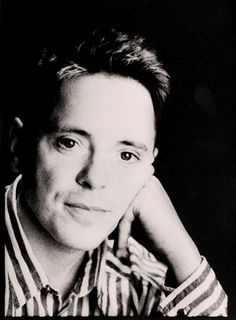
I’m going to say one thing about Bernard Sumner, if I don’t say anything else, and that’s…I like him. He seems like a likeable guy. I could be wrong, but I just read his autobiography, Chapter and Verse, and not only was it informative and insightful, regarding his years in Joy Division and New Order, but Bernard comes across as…a very down to earth, reasonable person. The kind of guy you could have a pint with, down your local, and end up thinking, ‘Oh, that was a really nice evening. We had an intelligent, amiable night, we talked about intelligent, amiable things, in a very civilised way.
‘Life shapes you, and what life does to you, shapes your art.’
– Bernard Sumner- Chapter and Verse.
I may have completely got the wrong end of the stick…according to, perhaps one other former band member, ahem, who I won’t mention…well, not yet. In fact I’m afraid to speak his name. We’ve gone into old school nineties horror here. Just like you don’t say ‘Candy Man’ three times while looking into a mirror, you also don’t say ‘Hooky’ three times into a mirror, not even a cracked one. Oops, I said his name, but only once, I will mention it again later, but you see, in his defence, he thinks differently and he sees things differently. There are always two sides to every story and I will address that, in time.
In the first section of the book, Bernard talks about his upbringing and mostly he has favourable memories of growing up in Salford and remembers it as a happy time. He has many poignant and thoughtful insights about growing up and his sometimes troubled relationship with his mother. Chapter and Verse is also a fast paced, well written account of Bernard’s musical journey from the seedlings of Joy Division to the full bloom of New Order.
Joy Division were formed in 1976, one of the very many bands to be inspired by a performance of The Sex Pistols at the Lesser Free Trade Hall, Manchester on 4 June 1976. Makes you think about the mathematical impossibilities, considering all the people who were supposed to be there, which would actually total 1,000+ by verbal accounts, That appearance spawned a generation of legendary bands, which is strange, because there were only around forty people there. Fortunately for Bernard, he was one of them, along with Tony Wilson and Paul Morley.
‘Punk and The Pistols blew a sneering path through the middle of all that puffed up musical pomposity.’
– Bernard Sumner, ‘Chapter and Verse.
Joy Division were originally named Warsaw, loosely named, after Bernard heard ‘Warszawa‘, a beautifully haunting instrumental album cut from David Bowie’s ‘Low’ album, (1977) co written by Brian Eno (had a huge effect on me too) The band consisted of singer Ian Curtis, guitarist and keyboardist Bernard Sumner, bassist Peter Hook, and drummer Stephen Morris.
‘I was relieved to get a call from someone, (after placing an ad for a new band member) who wasn’t a weirdo, or a mad hippie.’
‘He’s a drummer (Steve Morris) and drummers are odd people. They like hitting things for a living.’
Bernard Sumner- Chapter and Verse.
Tony Wilson signed Joy Division to his Factory Records label and they released Unknown Pleasures in 1979. The producer of the album was heroin addict, and Sméagol impersonator, Martin Hamnet, a musical and creative genius (think Mancunian Trevor Horn) with some social interaction issues. As the band’s popularity grew, Curtis, who suffered from similar problems, including the obligatory interpersonal issues and epilepsy, found it increasingly challenging to perform live. The album was a success, but on the eve of the bands U.S tour, in May 1980, Ian Curtis committed suicide.
‘He said he felt as if he was pulled inexorably into a great big whirlpool. I didn’t know what he meant by that.’
Bernard Sumner. ‘Chapter and Verse.’
Ian married young and had a wife and a baby. When success came, and all that went with it, including late night parties and social opportunities, he embarked on an affair. He had never thought it through, but by then, it was too late, it became impossible for him to make a decision. Damned if he did and damned if he didn’t. There was no way out. And so he chose what seemed to be the only way out.
The album Closer was released in July 1980, it would be the second and last Joy Division album. A song from the album, ‘Love Will Tear Us Apart‘ was released as a single shortly after Curtis’ death.
In the empty but restless void of bereavement, New Order was born. It seemed Bernard was the next natural vocalist for the newly named band. He could never fill Ian’s shoes, but then, he never wanted to. He went where he was gently nudged. But where he was gently nudged, seemed to work very well.
Steve Morris’ girlfriend also joined the band, Gillian Gilbert, playing keyboards and guitar.
‘Movement‘ the first album from New Order was released in the winter of 1981. At the time, it received a lukewarm reception, but has since, received much more favourable reviews. Like men and wine, it has aged better with time, and in 2008, the album was re-released in a Collector’s Edition with a bonus disc.
Their fifth single release as New Order was Blue Monday, 1983, which became the biggest selling twelve inch single of all time.
‘Power, Corruption and Lies‘ was New Order’s second album, released in the Spring of 1983, and unlike their first New Order release, was much more positively received. Mainly because it was seen as an album which cut New Order’s umbilical cord to Joy Division’s past. No more tied to the apron strings of Curtis’ legacy, New Order was finally able to run wild and free.
The band went on to release eight more albums and many compilations.
It was around this time, Tony Wilson and Rob Gretton put their heads together and opened their brain child, The Hacienda. It was financed by Factory Records, Tony and …er… revenue from New Order’s success, much to the bands surprise. For the basis of their ambitious dreams, Tony and Rob chose an innocuous warehouse on Whitworth Street West on the south side of the Rochdale Canal. The nightclub was active between 1982 and 1997, celebrating the upcoming trend of acid house and rave music. One of the first artists to perform there was Madonna. She faced a bored, restless, and typically hard to please, northern crowd.
While indulging Tony’s latest fantasy, albeit a guileless and genuine attempt to put Manchester on the map, the coffers of New Order and Factory Records, began to haemorrhage money.
Not that Bernard didn’t enjoy the spoils…
‘I started drinking far too much before gigs. Afterwards, I felt relieved I’d got through it and would drink even more.’
Bernard Sumner- Chapter and Verse.
This wasn’t just during gig time, the nightclub was open from Thursday through Saturday and Bernard and other band members were a permanent fixture at the bar, enjoying every square inch of it, but his Halcyon days in the Hacienda, were about to come to a timely end.
‘I’d been burning the candle at both ends for so long, the flame had finally reached the middle.’
Bernard Sumner – Chapter and Verse.
By the nineties, gang related violence, and a drugs related death, put an end to The Hacienda. When local magistrates and police visited the club in 1997 (I believe it was on a Saturday night when these middle aged, tea-total pillars of the community came round, and, witnessed (through their mini bus/car windows), a near-fatal assault, on an eighteen year old. They saw him being bludgeoned from behind, before being pushed into the path of an on-coming car.
It spelt the end of The Hacienda. It was a combination of the violence, oh, and maybe, just maybe, the dwindling finances, the security services who were unable, or unwilling, to maintain order, the rampant drug use, but mostly, mostly, the inability for anyone to pick up the nightly bar tab.
Peter Hook went on to own the name and trademark, ‘The Hacienda.’
In 1989, Bernard joined up with Smiths guitarist Johnny Marr to form Electronic. Neil Tennant from the Pet Shop Boys provided vocals to a couple of tracks on their debut album.
‘Bernard got him (Marr) in the divorce.’
–Peter Hook. (A humorous and entertaining interview that puts Hooky in a good light…finally.
In 2007, Bernard formed Bad Lieutenant with Phil Cunningham. They released one album and two singles. Bad Lieutenant sound like New Order on amitriptyline. A more mellow, relaxed, laid back version of New Order, which is what you need, and, sometimes want, in your more mature and responsible years. I’m not sure that’s selling it. Hey, but this is good for the ears, whatever age, or rebellious persuasion. Bad Lieutenant calmly and coldly suffocates mid life crisis, with a well placed, well upholstered pillow.
Runaway is a lovely example.
Now Bernard has quite a bit to say about his former band member Peter Hook, and visa versa. It’s the age old story, creative peeps get together, they create ‘art’ together. When they get together, there is a certain chemical fusion and things are good, things gel, for a while, but then something goes wrong. Bonding creatively, through the good times and the bad,and, living in each others pockets in a very short and intense amount of time, well, it takes its toll. After all that, perhaps it’s not so strange when creative harmony suddenly becomes creative differences.
Hate is a soup which takes time to stew.
I can’t say too much about it, because I haven’t seen the other side yet. It’s important to get the other side of the story, as we said before. Peter Hook has written two books about his experiences in the music industry, Unknown Pleasures. Inside Joy Division and, The Hacienda: How Not to Run A Club. I haven’t read either but I will and perhaps review and be able to provide a neutralising and balancing effect to what I’m about to say now.
(When Peter Hook came out of Rehab)
‘Out of nowhere, Hooky launched into this unprovoked , finger jabbing diatribe against me, accusing me of f****** up his past, intending to f*** up his future and telling me that I was responsible for everything that has ever gone wrong with New Order.’
-Bernard Sumner, Chapter and Verse.
In the book, whether deliberately or inadvertently, Hook comes across as an alcohol dependent, angry and unreasonable man.
In this new frame of mind, or perhaps old, Hooky announces publicly, without informing the other band members, that New Order has split up.
‘I’ve neither the desire for, neither the intention, of being drawn into a public slanging match with him but it’s difficult sometimes, especially with some of the more outlandish claims and slurs, calling me highly offensive names in the press. He still seems determined to perpetuate this imagined rivalry.’
Bernard Sumner- Chapter and Verse
Imagined rivalry? You see, that suggests to me, that it is not altogether imagined. If one person is disgruntled then it’s already a reality for one person and the other person is simply choosing not to acknowledge that reality. I think what we have here is simply two very different styles of communication. Hooky is, by nature, more upfront and confrontational, Sumner is more introverted and sensitive.
When he’s not making music, Bernard enjoys taking to the sea in a shallow boating vessel. Yachting helps him relax and connect with nature. We’re talking about a family man here. Relaxed, content and finally at peace with himself.
Bernard comes across as an imaginative, intelligent, down to earth, live- and-let-live individual, with a fair amount of integrity and creative talent. I can’t speak for Candy Man right now, but I will, because, as I keep saying, there are always two sides to every story, and when we properly analyse each side, it will help keep the gossip mongers away and help prevent character assassination. Maybe.
‘They sharpen their tongues like swords and aim cruel words like deadly arrows.’
Psalm 64:3
I think these two like each other, they just don’t want to admit it. They went through so much and not just the shock and bereavement of Ian’s suicide. They made great music together. They need to give it up and shake hands. When creative types work together, it can be absolute HELL, but it’s the nature of the beast. Life is short and these guys aren’t getting any younger.
And the fans, well, they hate the fact that they’re having a go at each other and the vitriol doesn’t seem to dilute, even over many years. In fact it just gets seems to grow stronger.
‘I’m looking after myself better. I’ve given up getting f***** up all the time and, as Jimmy Cliff sang, I can see clearly now the rain has gone. Shit does happen in life, but you can get over it. Don’t let it defeat you. And with that, I think we’ll leave my story there.’
Bernard Sumner – Chapter and Verse.
Last Great Female HellRaiser

When nature calls and we really need the bathroom, we might cross our legs, like a four year old at nursery school, and somewhere along the way, eventually, we have to pee, or run the risk of soiling ourselves. Betty May would simply cock her leg to mark her territory and she wouldn’t even need to go.
Physically, Betty May is long gone, but she is still here somewhere. Her will, personality, character and integrity is strong enough to penetrate the present time and is still very pertinent to this age and to the women of today. In spirit, Betty May is still alive. And that’s why I’m going to talk about her as if she is still alive and kicking. Kicking hard.
Betty May is the type of woman who doesn’t care what people think of her. At all. This is a woman who has no sense of self consciousness whatsoever. But that isn’t all. She isn’t just a rebel without a cause. She doesn’t do things just because she can. She has no sense of that awful destructive sin of pride. One of the worst. Or are they all named equal? Sometimes it depends on your perspective.
Her autobiography first published in 1929, is entitled ‘Tiger Woman. My Story. The Incredible Life That Inspired the musical, Betty May. Tiger Woman Versus The Beast’.
Who is the beast? Why, the most famous/infamous magician of all, Aleister Crowley. She takes him on and wins. Or rather, she doesn’t bow down to him or give him the time of day. She sees right through him. She knows he is probably just a creep, who couldn’t get girls when he was an adolescent. He may have internalised this, it may have built and built, as things do, into a rage against the female of the species and the obsessive thirst for that Golden and easily obtained Knowledge of ‘how to control women’ (A least half a dozen of his girlfriends had nervous breakdowns, the other half committed suicide) leading inevitably into deeper misogynistic thinking, paranoia and eventually impotency. Therefore, it’s only natural that he may learn other ‘methods’ of potency. i.e. killing defenceless animals.
Oh no, don’t go up against your local muscle bound peers or even your intellectual ones or your morally superior ones, ‘cos you can’t hack it can you Mr. Crowley? Don’t try to better yourself emotionally, mentally, educationally or spiritually to get ‘power.’ Instead, just act like any poorly brought up, ill educated teenage boy from an impoverished council estate…and kill the local moggy. Oh yes, Mr. Crowley, that is so manly. But you can’t even kill it yourself can you? You have to order other people to kill the cat, because you don’t have the stomach. (Please skip the rest of this paragraph, if you’re of a nervous deposition and/or love animals, especially cats) You would then order others to drink the blood of these animals. What a challenge it must have been for you to catch and kill something so much weaker than yourself, eh, Al? How Satan must have loved you for being able to catch and kill a cat. Where is the challenge in kicking a kitten and taking candy from a baby? Taking the wide road has always been incredibly easy, rather sad, and without challenge, and a real attraction to snivelling cowards.
I’m getting ahead of myself, as usual, and, I am in, a rather bad rant.
Ahem, Cough. Let me out. I apologise and compose myself. No, forget that, apologising is a sign of weakness and I take it back but I should state here that Crowley emphatically denied the cat killing/blood drinking incident. He also attempted to censor the book but was unsuccessful. Some people may think, ‘Well if Betty May fabricated some of the story, who’s to say what is truth and what is lie.’ Fair point but this book is a puzzle that needs to be unravelled and perhaps never solved and therein lies the beauty and the intrigue. So who is this Betty May? Why is she The Tiger and why is she connected with Aleister Crowley, the Great Beast, as he liked to call himself?

Betty May was born in 1893 in Canning Place, into abject poverty. She lived with her mother and brother initially, but, her mother, tired of working tirelessly, to ineffectively support two young children, sent Betty and her brother to her estranged husband. He lived in a brothel, an idle drunken slob and that is where Betty and her sibling stayed for some time. That was until her grandfather, her dad’s dad, arrested him and sent him off to jail. He was an inspector and long tired of his son’s lifestyle choices.
After spending the next couple of years in an idyllic existence, in the countryside with an strait laced and aunt and uncle, Betty escaped to London and became involved in the bohemian world of the Cafe Royal. She would only be matched, decades later, in her drinking, dancing and hell raising by her future male counterpart, Oliver Reed.
Whilst also being worldly in other matters, she was strangely innocent in others. She took a steam boat to Paris one evening with a lecher who tried to rape her at the end of the evening. She stabbed him with a pair of nail scissors and fled, ending up on the street, without fare back to England. Homeless and wandering, she inadvertently and rather haphazardly stumbled into a Parisian underworld rather like a French Mafia, called Les Apaches. A tough knife wielding female gang member was set upon her, as a kind of test. She gave as good as she got and then some. Thereafter she was nick named The Tiger.
I have a feeling that much in that last paragraph may be a fictional account in Betty May’s autobiography. She admitted that the book was ghost written but a large part of the resource was taken from articles she had written herself. She said the first part of her life is wholly true, as is the latter, but there are bits in between which aren’t. The continental Oliver Twist section feels contrived and rather romanticized but there is no way of knowing for sure.
So let’s just say, when eventually she escaped the gang and was able to return to London, she meets a man named Miles L. Atkinson, (1888–1917), nicknamed Bunny. He was a cocaine addict who quickly got her into the habit. He went to war in 1914 and was killed in action in 1917, but May was by now a heavy addict. She married again. Her new husband cured her of her addiction, by using the short sharp shock treatment of making her go cold turkey.
By the end of 1918, May had divorced her husband when she discovered he had been unfaithful. Husband number three was Raoul Loveday, an Oxford graduate. They lived in one room and Betty supported them by sitting as an artists model for sculptors Jacob Epstein and Jacob Kramer. Raoul meanwhile wrote poetry and was a bit of a tortured soul, as poets often are. He became bewitched by all things occult and found solace in the teachings of his friend and mentor, Crowley.
May gave her husband an ultimatum and he her. Stay or else, from her. Go or else, from him. They upped sticks and went to Sicily, taking up residence in the sparsely furnished and threadbare Abbey of Thelema. It was here she became cook and bottle washer for Crowley and his cronies, in exchange for sour cheese and bread every day and the most excellent wine she had ever tasted.
Crowley seems to have spent most of his time pouring over books, studying in the library and meditating like a proper old style monk. Apparently there were no orgies or anything remotely satanic going on at the Abbey, apart from the feline murder and the drinking of its blood.
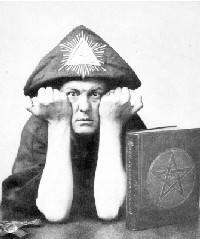
Betty herself is no stranger to the orgy and had partaken of many in her time. She says nothing like that ever happened at the abbey. The worst thing there was the lack of toilet facilities. No basin or lavatory to be seen. Betty even went rock climbing with Crowley on Sunday afternoons, as a special treat and they had a lovely time. Apparently, he couldn’t half climb rocks. He’s beginning to sound more like a benevolent Uncle, with each new piece of information, gleaned.
A few days after the blood drinking incident, Raoul, Betty’s current husband, and one of Crowley’s most obedient male sycophants, died. At first glance, it appears the ritual had something to do with it, but he drank some dodgy spring water that Crowley had warned him not to. Crowley to the rescue, once more. It’s like an Enid Blyton novel. Take these hard boiled egg sandwiches and lashings of ginger ale and have a wonderful time, but remember children, don’t drink the water.
At least his misogynistic view would be in line with Blyton literature. Remember, Betty May, let the boys put up the tent, ‘cos you’re a girl. (I had that said to me as a kid, but without the Betty May bit and the tent). Saying that, Cuddly Crowley did take Betty May rock climbing. That’s not so misogynistic. Oh, he’s such a mass of contradictions.
With Raoul gone, Betty got out of there fast and returned to London. Unlike Raoul, she resisted drinking the water on that thirsty outing out. I say, Betty May, that’s pretty smart…for a girl.
The book fizzles out somewhat and you just get the impression that she’s about to ride off into the sunset for some more wonderful and exciting adventures and perhaps a fifth husband, of which there is rumour. She apparently moved a bit further north in her twilight years, did some charity work for orphans, stopped having orgies (or perhaps not) and died when she was 86 in about 1986, which wraps it up nicely.
The thing is, the book may have been ghost written, it may be fictional in some parts. (I hope it’s the cat bit, ‘cos I love animals, but I only think it’s true, ‘cos I’m not a big fan of Cuddly Crowley and it seems like just the kind of thing he would do. Well, he was the most ‘Wicked Man In Britain’, no wait, it’s worse than that, the world.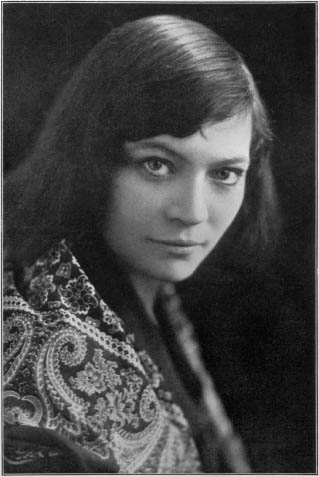
Betty May seems like such a natural soul, so innocent and sweet in some ways, apart from the orgies of course, but we all have our little foibles. She is spontaneous and impulsive and responsive with the people she comes into contact with, a prerequisite for orgies, I think, but also for being warm hearted and lovable. Not sure if we can be lovable if we over think things and it’s so easy to over think things. I’m not sure she did a lot of thinking but she got Cuddly Crowley’s number, and that was rare, for after his schooling in the art of pick up, he was reputedly, hard to resist.
Maybe, this scene will sum up what I’m trying to say about Betty May. I think it says something nice about this woman, hell raiser or not.
She works in a hairdressers and has heard a newspaper report that a woman had caught leprosy from a Chinese hair net. Maybe it’s the drugs, paranoia or both but guess what product she has just started unpacking while she was in the hairdressers? Yes, you guessed it, Chinese hair nets. So she runs out into the street and onto a packed bus, tells everyone to keep away from her. Gives the fare to the bus driver and tells him not to touch it because she has leprosy (she doesn’t) and makes a complete spectacle of herself in front of very many people. She may also have been off her face on drugs, but she cares and that’s the main thing, she genuinely cares.
The Last Woman
Imagine you’re doing a quiz somewhere, let’s say down the local pub. The Quiz Master asks, ‘Who was the last woman to be executed in Britain?’
Your pen/pencil is poised. That’s easy. It went into human consciousness years ago. It’s like being asked ‘Who won the 1966 World Cup?’, or ‘Who was British Prime Minister between 1979 and 1990?’ It’s a no-brainer really, certainly for people of a certain age. You know that you can afford yourself a self satisfied smile, which passes between you and your team mates, as you smugly supply the answer on your quiz sheet.
I wonder though, if, in that smoke free but boozy bar room, the quiz master asked another question instead. ‘Who was the last person to be executed in Britain?’ There is a silence. You can hear people thinking, a few glasses clink at the bar. People shift buttocks. The teams confer with puzzled expressions. They start to cast surreptitious looks to the other teams and their closely guarded papers. It’s a bit like being at school suddenly. Hmm, you tap the pencil on your knee/chin/beermat/glass. Then the quiz master says something you did not expect, a generous clue. ‘It’s a trick question this one.’
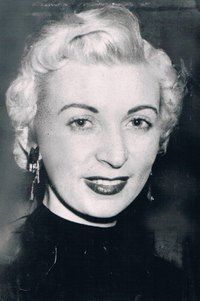
He has further added to the confusion, he said person, not woman, still, same thing isn’t it? Maybe that’s where the trick question is. After all, this is the cliché standard answer to a standard question and there is the scratchy sound of pencil on paper as most people write ‘Ruth Ellis’
Now before we get too bogged down in this mythical pub, we’ll come back to that later, it’s been 50 years, this year, that the Sidney Silverman’s Murder Act was passed, abolishing the death penalty in Britain. The famous Ruth Ellis murder trail and her subsequent execution, played no small part in a social awareness evolution. An evolution that was to eventually end capital punishment in Britain.
Ruth Ellis was brought up in a poverty stricken working class home. Her father abused the female members of the family, resulting in him fathering two children to Ruth’s sister, Muriel.
As soon as she was able, Ruth reinvented herself. She escaped to London and into the sleazy, yet often exciting world, of west end night life. The nerdy, bespectacled and rather mousy young woman hid her inhibitors to glamour (her glasses) in a place where they would not offend her, usually her handbag. Then, she bleached her hair an eye catching platinum blonde. She began taking modelling courses, became a hostess and eventually ran a nightclub herself, turning quite a profit.
In this environment, she met the public school boy educated David Blakely and they had an tempestuous off and on affair.
The rest as they say…is history.
Ruth and David make the future Sid and Nancy look like Andy Pandy and Looby Loo, yet, just like the yet-to-be Sid and Nancy, Ruth and David were lost souls, helplessly gravitating towards each other, drowning in their misery, gasping, as they are grasping, and destroying each other accordingly.
In some of the accounts in the biography, ‘A Fine Day For A Hanging‘ The Real Ruth Ellis Story’ by Carol Ann Lee, it appears Ruth was a victim of domestic violence. Many witnesses in her circle, at the time, spoke of the very many and numerous bruises covering her body on a daily basis. The book talks about one incident where she disrobes in front of a man and he was so shocked and disturbed by what he saw (she was so badly bruised) that their night of sexual congress was aborted.
She was punched in public by her lover, two days before she shot him and was often seen with black eyes. She acquiesced to his need to drink and became a drinker herself. It is alleged that she was drinking a bottle and a half of Pernod a day (after meeting David)
The problem was, like most victims of systemic physical or psychological violence, the victims are ashamed and often believe they are deserving of the treatment and/or do not feel they have the strength to leave, or to end the relationship. They are unsure how to resolve the situation and are unable to see any avenues for a way out.
When Ruth gave her statement to the police, there was no solicitor present and during the trail there was very little reference to any physical violence she may have endured at her lover’s hands. Her defence team were woefully inadequate in that department and so, a plea for manslaughter was never in it. Although, it has to be said, Ruth would not help herself in this matter. She would not ‘accuse’ anybody of anything. Apparently, during the trial, she never had a bad word to say about anyone. Wouldn’t. She thought it was ‘traitorous.’ It was very frustrating for her defence team.
Perhaps it was a kind of honour. Certainly, where I come from, there’s a culture where people don’t ‘grass’, don’t tell on other people, even if those other people are to blame and even if it might save our skins. S.O.S. Maybe it’s a foolish kind of honour, but there it is. It’s better to save our souls than save our skins.
However, a plea of provocation was introduced.
Her legal team, credit where credit’s due, did make a concerted effort to make a plea of ‘slow burn’ provocation, but it was not a term recognised either in America or Britain at the time, and this was obviously the case here.
‘Provocation- defined as an act that might reasonably cause a person of sound mind to suffer a sudden and temporary loss of self control, rendering the accused so subject to passion as to make him or her not master of his mind.’
‘With diminished responsibility not yet a legal term, it may be this is why David’s violence over the past eighteen months, together with his persistent infidelity and emotional abuse, were deemed irrelevant in court.’
From ‘Eve Was Framed‘- Helena Kennedy
And then there’s the other angle. The angle of the gun. Desmond Cussen was the other man in the love triangle. He adored Ruth and disliked his love rival, David Blakely. Cussen did seem like a decent guy, but the theory was, he had not only provided Ruth with the murder weapon, he reputed to have regularly oiled it, loaded it, taught Ruth how to shoot and goaded her into shooting David, when she was drunk and deeply emotionally disturbed. There were even accusations that he had been the one to drive her to the scene of the crime. None of this stuck however, as Cussens was never fully cross examined in the witness box and certainly not on this issue. He did perspire in that box however, unnaturally and profusely, like a stuck pig.
Less than twenty four hours before she was due to hang, part of Ruth’s defence team, Mishcon and Simmons, questioned her once more about how she obtained the gun. There was still a slim chance that she could escape the noose. She was keeping it zipped until one of them mentioned how her children would feel if the truth didn’t come out. Then she started to talk about how she had indeed been taught how to shoot by Cussens and more. She had been drinking on the night of the murder. Indeed, so had Cussens. She mentioned how jealous he was of Blakely and how they despised each other. She said he gave her the loaded gun and drove her to the scene of the crime. Mischons and Simmons took her new statement to Whitehall. The person they really needed to speak to wasn’t there, so the information was passed on to somebody else. The Home Office did not delay the execution in the light of new information.
And now back briefly to our mythical pub, when the quiz master gives out the answers. ‘Question 18, ‘Who was the last person to be executed in Britain?’ The answer is ‘Gwynne Evans and Peter Allan. Two men from Preston who had killed a man in a botched robbery.
But does anyone remember them? And do we know who was the last of these men to be hanged? Was it Evans or was it Allan? Indeed, it was a trick question. It wasn’t Ruth Ellis at all. She was the last woman and not the last person, and it wasn’t one person at all. It was two. Two men.
Why then, was Ruth Ellis the one who provoked such incredible feelings from the public? Did it resonate somehow, this crime of passion? Was it because her defence was so abysmally weak? Did we feel it wasn’t a fair trail? We are sticklers for fairness in Britain, are we not?
Or was it because she wouldn’t save her skin? Or was it down to the polite and utterly dignified composure she exhibited during her trial from start to finish? Did her calm resignedness strike a nerve with the stiff upper lips of the nation?
Or was it simply that we, as a nation, had reached an evolution, a certain perception and outlook regarding capital punishment? Britain was getting queasy, squeamish, soft, or maybe just more humane?
‘This was a crime of passion under considerable provocation.’
‘I pray to Almighty God to cause this disgraceful sin (execution) to pass from among us and to cleanse our land of blood.’
‘I reject the death penalty because of its absolute nature, it’s questionable nature and its revolting nature.’
Bishop Of Stepney, who visited Ruth Ellis shortly before her death.
‘Executions are unnatural crimes.’
Ruth Ellis wanted to die. She wanted to be with the man she had killed. She believed she deserved to die. And for that, I think she deserved to live.
‘An eye for an eye, a tooth for a tooth,’ said Ruth. ‘A life for a life. I took David’s life and I don’t ask you to save mine. I don’t want to live.’ And for once, in her short and turbulent life, Ruth finally got what she wanted.
Flowers In November

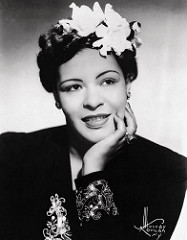
I sometimes like to read about the seedier side of life because that’s where I see the diamonds in the rough, the flowers that bloom in November.
Just before we have our little tea and biscuit chat about Billie Holiday, because that’s the topic of today’s post, I’d like to give a little mention to a flowering plant called the ‘Sea Daisy.’ What’s that got to do with blues singer Billie Holiday you say, well, I’ll tell you, but all in good time.
I acquired the seed, quite by accident. When I was moving to the coast, several years ago, I dropped the pot. Plant, soil and all. My husband, realist that he is said, ‘You’ve lost that now, just bin it.’ and being the dreamer, idealist, that I am,(not necessarily an optimist) I got down on my knees and started to scrape up the earth with my hands, putting it back in the broken pot, much to the amusement of all my new neighbours, who were nosing around at the time.
A little baby leaf, about the size of a fingernail was all I had left of the plant that had died on the kerb, and it wasn’t even attached to anything, so I stuck it in into the soil, put in on the sill of the tiny window, in that dark little (temporary) bedsit, prayed over it, gave it love, baby. How do you give a plant love? Hard to explain. I’m not really one for expression of love, although I do feel it, I suppose, whatever it was, is, I gave it to that pot of soil, with the little biddy leaf.
The leaf grew, went from strength to strength, and I got some funky green things growing, man. It was far out. The plant did indeed regain its former glory but also, also, a strange new plant was born. Sea Daisies. They bloom in April/May and then again in the constant rainy gloom of November, where the days are short and dark, like the chocolate bars of today, but that’s seasons for you, you can’t live with ’em, you can’t live without ’em…

Of course, I notice them more in November. Looking at those copious and vibrant amounts of beautiful pink flowers, year after year, during such a dark, damp November day, would put hope for the promise of spring in most people’s hearts. Any time I feel down, especially during these short days, I just look at those flowers in November and it cheers me right up. I’m looking at them right now. Here’s mine, a bit blurred, but then, I can never take a good picture, always blurred.

Flowers in November and diamonds in the rough and light in the darkest places… brings me right back to Billie.
Short listed for the Orange Prize, the book ‘With Billie’ by Julia Blackburn, instantly drew my attention because she sort of rescued the book, or rather a portion of material for the book. The woman who was originally accumulating all the research was Linda Kuehl. She painstaking and extensively gathered personal letters, photo’s, transcripts, documents from courts, hospitals, police rooms, newspaper cuttings and two shoe boxes full of audio tapes, full to the brim with interviews from everyone to John Levy the bass player to John Levy, the pimp.
Tragically, Linda Kuehl, committed suicide, by jumping from her apartment building, before the completion of her book. It is not known what had tipped her over the edge.
So, already, Julia Blackburn’s book, has a rather interesting back story, not a nice one, but still interesting.
A Jewish guy called Abel Meeropol, wrote a poem called ‘Strange Fruit‘, about the systematic murder of black men by racist groups. Cause of death, strangulation, through lynching. He had been disturbed by a photograph of the murder scene and its victim. He set the poem to music and later changed his name to Lewis Allen. When the song is performed by Billie Holiday, it is still reminiscent of a poetry performance, the music accompaniment and melody is minimal, making the lyric and atmosphere even more potent. In the early 1900’s, lynching was at it’s most prevalent but was still going on in the forties. Black men were lynched for the ‘crime’ of ‘uppitiness’, a black man might be getting ‘above his station’, through job promotions, signs of growing wealth, going out with a woman he shouldn’t be going out with, any excuse. Billie herself had experienced segregation, even at the peak of her career and success. Even in some places in New York, facilities were out of bounds to her, restaurants, toilets, hotels, venues that white people took for granted. Sometimes she would have to stay in her room until she was called upon to sing her songs.
Billie cites one of the main reasons why the Federal Bureau of Narcotics and the FBI was always on her case, was because of that song. After she recorded it and it did so well, she felt it was no coincidence that they were always breathing down her neck. The minute she sung the last note of that song, she became, unwittingly, a political activist. Unwittingly, because she claimed she didn’t know what the song was about, at first. The poem is not without its clever subtleties, symbolisms and metaphors.
She was soon to understand, as time went on, how volatile it really was, and how it would guarantee that even, as she lay in her sick bed, she would be harassed by the authorities until the bitter end. Apparently, she had been getting much better in hospital, eating well and recovering enough to feel optimistic about the future.
But then a nurse reported the presence of white powder around her nose and she was instantly arrested, interrogated, all simple comforts removed from her bedside. No possibility of bail, kept under watch every minute of the day. She was told that now, even if she got better, she would be transferred straight from hospital to prison.
Something broke in Billie that day. All her life, she had battled demons, survived a childhood of abuse, a life time of prostitution, a war with addiction, and finally, her very last battle with the authorities, before the wave of the white flag. All her life, she may have given in, but she never gave up. Now, it was time. Within the month, she was dead.
Many jazz musicians, black and white, were using drugs around the same time Billie was, including jazz legends Sarah Vaughan and Gerry Mulligan. Sarah Vaughan was targeted more readily than Gerry Mulligan. Perhaps, also being black, female and a friend of Billie’s may have made her fair game but as Billie said from a 1947 interview from Downbeat magazine, ‘I’ve made a lot of enemies. Singing that song hasn’t helped any.’
Jimmy Fletcher, a Federal Narcotics Agency officer, was a man who had some regrets regarding the hounding of Billie. He appears to have had conflicting emotions, on one hand, understandably, he hated drugs and all they stood for, but he had a respect for Billie that had little to do with her being a singer and more to do with her humanity, what she was, not who she was. She had class, despite the quagmire that she had found herself in. Although completely swallowed up by her environment, she somehow, in some way, was able to rise above it. Her lack of confidence in the face of her fame and especially her talent, gave her an attractive modesty, a beguiling humility. She was known to be intelligent, kind and appeared to have integrity. Jimmy Fletcher noted that he had an opportunity to help her a few times and never took him up on it. Apparently, that was typical of Billie, she never called in favours from people she had much to get back from.
She came from the gutter and lived in it, but her ‘goodness’ gave her class. I’m not talking about social class, not monetary, silver spoon or hereditary. We all know the biggest fools and mightiest asses can and often do run roughshod through all the social classes, and there’s scum to be found on every shoe. Humanity, integrity, goodness, they’re the important qualities that denote class, in the true meaning of the word. What scale are we on ?
I’m going to leave Jimmy Fletcher with the last word, or at least, second to last. He said of Billie that ‘She was the loving type.’ Many would find it almost impossible to be the ‘loving type’ in an environment like that, and with an upbringing like that. It’s almost a miracle, but then, we know it must be possible, for we have seen flowers blooming in November.
 Things In My Head