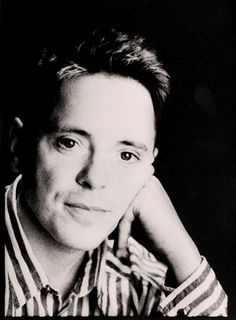
I’m going to say one thing about Bernard Sumner, if I don’t say anything else, and that’s…I like him. He seems like a likeable guy. I could be wrong, but I just read his autobiography, Chapter and Verse, and not only was it informative and insightful, regarding his years in Joy Division and New Order, but Bernard comes across as…a very down to earth, reasonable person. The kind of guy you could have a pint with, down your local, and end up thinking, ‘Oh, that was a really nice evening. We had an intelligent, amiable night, we talked about intelligent, amiable things, in a very civilised way.
‘Life shapes you, and what life does to you, shapes your art.’
– Bernard Sumner- Chapter and Verse.
I may have completely got the wrong end of the stick…according to, perhaps one other former band member, ahem, who I won’t mention…well, not yet. In fact I’m afraid to speak his name. We’ve gone into old school nineties horror here. Just like you don’t say ‘Candy Man’ three times while looking into a mirror, you also don’t say ‘Hooky’ three times into a mirror, not even a cracked one. Oops, I said his name, but only once, I will mention it again later, but you see, in his defence, he thinks differently and he sees things differently. There are always two sides to every story and I will address that, in time.
In the first section of the book, Bernard talks about his upbringing and mostly he has favourable memories of growing up in Salford and remembers it as a happy time. He has many poignant and thoughtful insights about growing up and his sometimes troubled relationship with his mother. Chapter and Verse is also a fast paced, well written account of Bernard’s musical journey from the seedlings of Joy Division to the full bloom of New Order.
Joy Division were formed in 1976, one of the very many bands to be inspired by a performance of The Sex Pistols at the Lesser Free Trade Hall, Manchester on 4 June 1976. Makes you think about the mathematical impossibilities, considering all the people who were supposed to be there, which would actually total 1,000+ by verbal accounts, That appearance spawned a generation of legendary bands, which is strange, because there were only around forty people there. Fortunately for Bernard, he was one of them, along with Tony Wilson and Paul Morley.
‘Punk and The Pistols blew a sneering path through the middle of all that puffed up musical pomposity.’
– Bernard Sumner, ‘Chapter and Verse.
Joy Division were originally named Warsaw, loosely named, after Bernard heard ‘Warszawa‘, a beautifully haunting instrumental album cut from David Bowie’s ‘Low’ album, (1977) co written by Brian Eno (had a huge effect on me too) The band consisted of singer Ian Curtis, guitarist and keyboardist Bernard Sumner, bassist Peter Hook, and drummer Stephen Morris.
‘I was relieved to get a call from someone, (after placing an ad for a new band member) who wasn’t a weirdo, or a mad hippie.’
‘He’s a drummer (Steve Morris) and drummers are odd people. They like hitting things for a living.’
Bernard Sumner- Chapter and Verse.
Tony Wilson signed Joy Division to his Factory Records label and they released Unknown Pleasures in 1979. The producer of the album was heroin addict, and Sméagol impersonator, Martin Hamnet, a musical and creative genius (think Mancunian Trevor Horn) with some social interaction issues. As the band’s popularity grew, Curtis, who suffered from similar problems, including the obligatory interpersonal issues and epilepsy, found it increasingly challenging to perform live. The album was a success, but on the eve of the bands U.S tour, in May 1980, Ian Curtis committed suicide.
‘He said he felt as if he was pulled inexorably into a great big whirlpool. I didn’t know what he meant by that.’
Bernard Sumner. ‘Chapter and Verse.’
Ian married young and had a wife and a baby. When success came, and all that went with it, including late night parties and social opportunities, he embarked on an affair. He had never thought it through, but by then, it was too late, it became impossible for him to make a decision. Damned if he did and damned if he didn’t. There was no way out. And so he chose what seemed to be the only way out.
The album Closer was released in July 1980, it would be the second and last Joy Division album. A song from the album, ‘Love Will Tear Us Apart‘ was released as a single shortly after Curtis’ death.
In the empty but restless void of bereavement, New Order was born. It seemed Bernard was the next natural vocalist for the newly named band. He could never fill Ian’s shoes, but then, he never wanted to. He went where he was gently nudged. But where he was gently nudged, seemed to work very well.
Steve Morris’ girlfriend also joined the band, Gillian Gilbert, playing keyboards and guitar.
‘Movement‘ the first album from New Order was released in the winter of 1981. At the time, it received a lukewarm reception, but has since, received much more favourable reviews. Like men and wine, it has aged better with time, and in 2008, the album was re-released in a Collector’s Edition with a bonus disc.
Their fifth single release as New Order was Blue Monday, 1983, which became the biggest selling twelve inch single of all time.
‘Power, Corruption and Lies‘ was New Order’s second album, released in the Spring of 1983, and unlike their first New Order release, was much more positively received. Mainly because it was seen as an album which cut New Order’s umbilical cord to Joy Division’s past. No more tied to the apron strings of Curtis’ legacy, New Order was finally able to run wild and free.
The band went on to release eight more albums and many compilations.
It was around this time, Tony Wilson and Rob Gretton put their heads together and opened their brain child, The Hacienda. It was financed by Factory Records, Tony and …er… revenue from New Order’s success, much to the bands surprise. For the basis of their ambitious dreams, Tony and Rob chose an innocuous warehouse on Whitworth Street West on the south side of the Rochdale Canal. The nightclub was active between 1982 and 1997, celebrating the upcoming trend of acid house and rave music. One of the first artists to perform there was Madonna. She faced a bored, restless, and typically hard to please, northern crowd.
While indulging Tony’s latest fantasy, albeit a guileless and genuine attempt to put Manchester on the map, the coffers of New Order and Factory Records, began to haemorrhage money.
Not that Bernard didn’t enjoy the spoils…
‘I started drinking far too much before gigs. Afterwards, I felt relieved I’d got through it and would drink even more.’
Bernard Sumner- Chapter and Verse.
This wasn’t just during gig time, the nightclub was open from Thursday through Saturday and Bernard and other band members were a permanent fixture at the bar, enjoying every square inch of it, but his Halcyon days in the Hacienda, were about to come to a timely end.
‘I’d been burning the candle at both ends for so long, the flame had finally reached the middle.’
Bernard Sumner – Chapter and Verse.
By the nineties, gang related violence, and a drugs related death, put an end to The Hacienda. When local magistrates and police visited the club in 1997 (I believe it was on a Saturday night when these middle aged, tea-total pillars of the community came round, and, witnessed (through their mini bus/car windows), a near-fatal assault, on an eighteen year old. They saw him being bludgeoned from behind, before being pushed into the path of an on-coming car.
It spelt the end of The Hacienda. It was a combination of the violence, oh, and maybe, just maybe, the dwindling finances, the security services who were unable, or unwilling, to maintain order, the rampant drug use, but mostly, mostly, the inability for anyone to pick up the nightly bar tab.
Peter Hook went on to own the name and trademark, ‘The Hacienda.’
In 1989, Bernard joined up with Smiths guitarist Johnny Marr to form Electronic. Neil Tennant from the Pet Shop Boys provided vocals to a couple of tracks on their debut album.
‘Bernard got him (Marr) in the divorce.’
–Peter Hook. (A humorous and entertaining interview that puts Hooky in a good light…finally.
In 2007, Bernard formed Bad Lieutenant with Phil Cunningham. They released one album and two singles. Bad Lieutenant sound like New Order on amitriptyline. A more mellow, relaxed, laid back version of New Order, which is what you need, and, sometimes want, in your more mature and responsible years. I’m not sure that’s selling it. Hey, but this is good for the ears, whatever age, or rebellious persuasion. Bad Lieutenant calmly and coldly suffocates mid life crisis, with a well placed, well upholstered pillow.
Runaway is a lovely example.
Now Bernard has quite a bit to say about his former band member Peter Hook, and visa versa. It’s the age old story, creative peeps get together, they create ‘art’ together. When they get together, there is a certain chemical fusion and things are good, things gel, for a while, but then something goes wrong. Bonding creatively, through the good times and the bad,and, living in each others pockets in a very short and intense amount of time, well, it takes its toll. After all that, perhaps it’s not so strange when creative harmony suddenly becomes creative differences.
Hate is a soup which takes time to stew.
I can’t say too much about it, because I haven’t seen the other side yet. It’s important to get the other side of the story, as we said before. Peter Hook has written two books about his experiences in the music industry, Unknown Pleasures. Inside Joy Division and, The Hacienda: How Not to Run A Club. I haven’t read either but I will and perhaps review and be able to provide a neutralising and balancing effect to what I’m about to say now.
(When Peter Hook came out of Rehab)
‘Out of nowhere, Hooky launched into this unprovoked , finger jabbing diatribe against me, accusing me of f****** up his past, intending to f*** up his future and telling me that I was responsible for everything that has ever gone wrong with New Order.’
-Bernard Sumner, Chapter and Verse.
In the book, whether deliberately or inadvertently, Hook comes across as an alcohol dependent, angry and unreasonable man.
In this new frame of mind, or perhaps old, Hooky announces publicly, without informing the other band members, that New Order has split up.
‘I’ve neither the desire for, neither the intention, of being drawn into a public slanging match with him but it’s difficult sometimes, especially with some of the more outlandish claims and slurs, calling me highly offensive names in the press. He still seems determined to perpetuate this imagined rivalry.’
Bernard Sumner- Chapter and Verse
Imagined rivalry? You see, that suggests to me, that it is not altogether imagined. If one person is disgruntled then it’s already a reality for one person and the other person is simply choosing not to acknowledge that reality. I think what we have here is simply two very different styles of communication. Hooky is, by nature, more upfront and confrontational, Sumner is more introverted and sensitive.
When he’s not making music, Bernard enjoys taking to the sea in a shallow boating vessel. Yachting helps him relax and connect with nature. We’re talking about a family man here. Relaxed, content and finally at peace with himself.
Bernard comes across as an imaginative, intelligent, down to earth, live- and-let-live individual, with a fair amount of integrity and creative talent. I can’t speak for Candy Man right now, but I will, because, as I keep saying, there are always two sides to every story, and when we properly analyse each side, it will help keep the gossip mongers away and help prevent character assassination. Maybe.
‘They sharpen their tongues like swords and aim cruel words like deadly arrows.’
Psalm 64:3
I think these two like each other, they just don’t want to admit it. They went through so much and not just the shock and bereavement of Ian’s suicide. They made great music together. They need to give it up and shake hands. When creative types work together, it can be absolute HELL, but it’s the nature of the beast. Life is short and these guys aren’t getting any younger.
And the fans, well, they hate the fact that they’re having a go at each other and the vitriol doesn’t seem to dilute, even over many years. In fact it just gets seems to grow stronger.
‘I’m looking after myself better. I’ve given up getting f***** up all the time and, as Jimmy Cliff sang, I can see clearly now the rain has gone. Shit does happen in life, but you can get over it. Don’t let it defeat you. And with that, I think we’ll leave my story there.’
Bernard Sumner – Chapter and Verse.

 Things In My Head